

Key Takeaways
- Assisted living is designed for seniors who are mostly independent but could use some help with daily activities.
- Memory care offers a structured and secure environment for individuals living with Alzheimer’s, Parkinson’s, or dementia.
- The main differences between the two involve the level of personal care, staff background, and the structure of daily programs.
- You can also explore options like respite care for short-term stays, which can support family caregivers.
How to Approach Senior Living Choices
When you start to explore senior living communities like The Fairways at Naples, you’ll find different levels of care designed to support specific needs. The journey to find the right fit for a family member involves a look at their daily life, health, and personal preferences. This guide helps you review the distinctions between memory care and assisted living so you can make a more informed decision.
Understanding these differences can help you identify the lifestyle that best aligns with your loved one’s current needs. The right choice often comes down to the level of support required for daily tasks, the type of social engagement that is most beneficial, and the need for a specially designed environment.
A Look at Assisted Living
Who May Benefit from Assisted Living
Assisted living can be a wonderful option for many people. You might find it’s a good fit for your loved one if they are looking for a community setting that balances independence with available support. Consider this path for:
- Seniors who are largely independent but need some help with activities of daily living like medication reminders or preparing meals.
- Individuals who want to live in a social environment without the responsibilities of home maintenance.
- Couples who may have different care needs but wish to live together in a supportive community.
Daily Life in an Assisted Living Community
Life in assisted living often centers on choice and independence. Your loved one can maintain their own schedule while having access to social events, dining services, and transportation for appointments or outings. This lifestyle encourages them to pursue hobbies and connect with new friends. Support is always nearby, but it’s provided discreetly to respect their autonomy and personal rhythm.
The Focus on Independence and Support
The main goal of assisted living is to help residents stay active and engaged while providing a safety net of support. Team members are available to assist when needed, which gives both residents and their families peace of mind. Your loved one receives the help they need without giving up the freedom they value. This approach allows your family member to focus on enjoying their days with friends and pursuing their interests.
What Is Memory Care?
A Community Designed for Cognitive Support
Memory care offers a specialized environment for individuals with Alzheimer’s, dementia, or other forms of memory loss. These communities are designed to be safe, structured, and easy to navigate. A clear and calm setting can help reduce confusion and anxiety for your loved one.
How Specialized Support Helps Your Loved One
The team members in a memory care setting are prepared to offer compassionate support for those with cognitive changes. They provide more hands-on, 24-hour support with daily activities, from personal care to communication. For example, activities may involve familiar music, simple crafts, or gentle exercise designed to spark positive connections. These programs are created to engage residents and support their cognitive function in a gentle and reassuring way.
The Importance of a Secure Environment
You’ll find that memory care neighborhoods are secure to keep residents safe. This design allows them to move freely within their environment while preventing unsafe wandering. It provides a sense of freedom in a protected setting where they can walk through courtyards and social areas feeling secure.
Key Differences to Consider
While both options provide support, the differences are significant. Understanding them can help clarify which environment is the right fit, and it can also be useful to compare memory care vs. nursing home care to see the full spectrum of options.
Level of Personal Care and Health Services
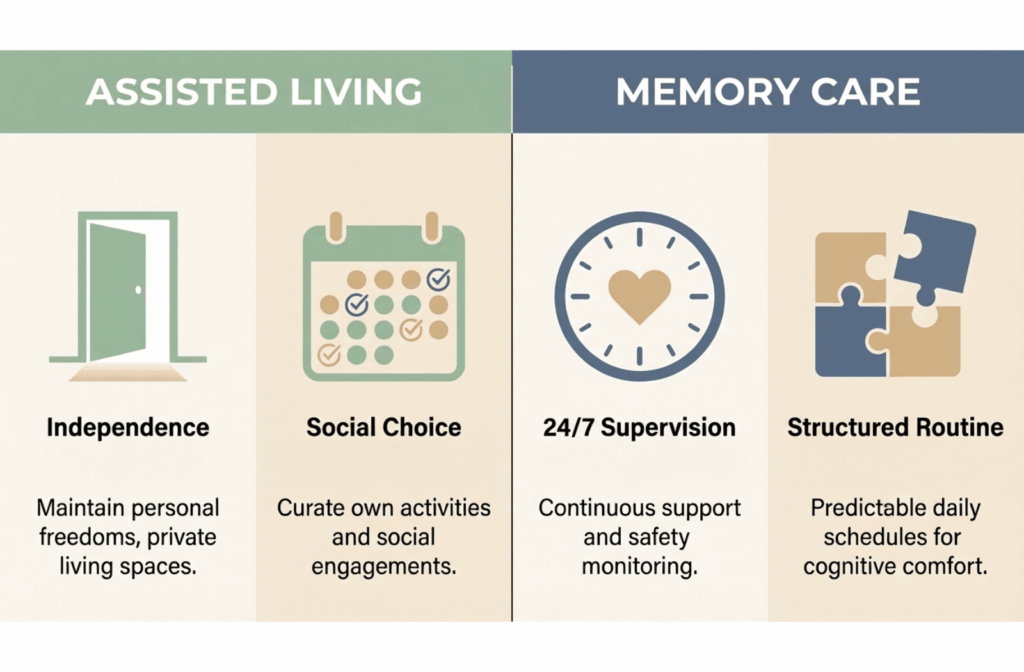
Assisted Living: This setting offers “as-needed” support. Help is available for daily tasks, but residents manage much of their own day with a sense of independence.
Memory Care: This type of care provides comprehensive, around-the-clock supervision and support tailored to the challenges of memory loss.
Staff Approach and Background
Assisted Living: Staff are trained to assist with daily living activities while encouraging residents to remain as independent as possible.
Memory Care: Team members receive ongoing education specific to dementia and cognitive change to offer knowledgeable support. They learn techniques to communicate effectively and provide comfort, which can help reduce stress for family caregivers.
Daily Schedules and Programs
Assisted Living: Features a wide variety of social, recreational, and educational events that residents can choose to join based on their interests.
Memory Care: Offers structured, routine-based activities that are designed to be enjoyable and reduce stress, helping your loved one feel successful and engaged.
Other Forms of Senior Living Support
What Is Respite Care?
Beyond long-term options, many senior living communities offer respite care. This involves short-term stays that can last for a few days or a few weeks. It’s a valuable option that allows family caregivers to take a break, travel, or attend to other responsibilities. As temporary relief for caregivers can help prevent burnout, it supports the well-being of the entire family.
When to Consider Short-Term Stays
You might consider a short-term stay for a number of reasons. It can be helpful for a senior recovering from a hospital visit who needs a bit of extra support. It also gives your loved one a chance to experience community life before making a long-term commitment.
Choose the Right Path for Your Family
The choice between memory care and assisted living depends on your loved one’s unique situation. It’s helpful to consider if now is the time for memory care by looking at their need for support with daily life, social interaction, and safety. Open conversations with family can help guide you toward the most fitting solution.At The Fairways at Naples, the experienced memory care team is prepared to help you identify a lifestyle option that fits your family’s needs. The community’s holistic approach is built on forming strong relationships with residents and their families, and you can schedule a visit to learn more and support a life of peace and comfort.