


Conversations with a loved one can start to feel different when cognitive changes are involved. You may notice yourself adjusting your tone, simplifying your words, or trying to guide the interaction more than you used to. These shifts often come from a place of care, but they can unintentionally change how your loved one experiences the conversation.
One of the most common habits families fall into is “elder speak”—a style of communication that can feel dismissive or overly simplified. Small adjustments in how you speak can help preserve dignity, reduce frustration, and strengthen your connection. With the right approach, everyday conversations can feel more natural, respectful, and meaningful.
Key Takeaways
- “Elder speak” includes overly simple language, slower speech, and childlike tones that may feel dismissive
- Even well-meaning communication habits can impact confidence, independence, and emotional well-being
- Speaking naturally and respectfully helps maintain dignity and strengthens relationships
- Clear, direct language improves understanding without sounding condescending
- Patience, active listening, and open-ended questions support better conversations
- Nonverbal cues like eye contact and tone help create a calm, supportive communication environment
What Elder Speak Is and Why It Matters
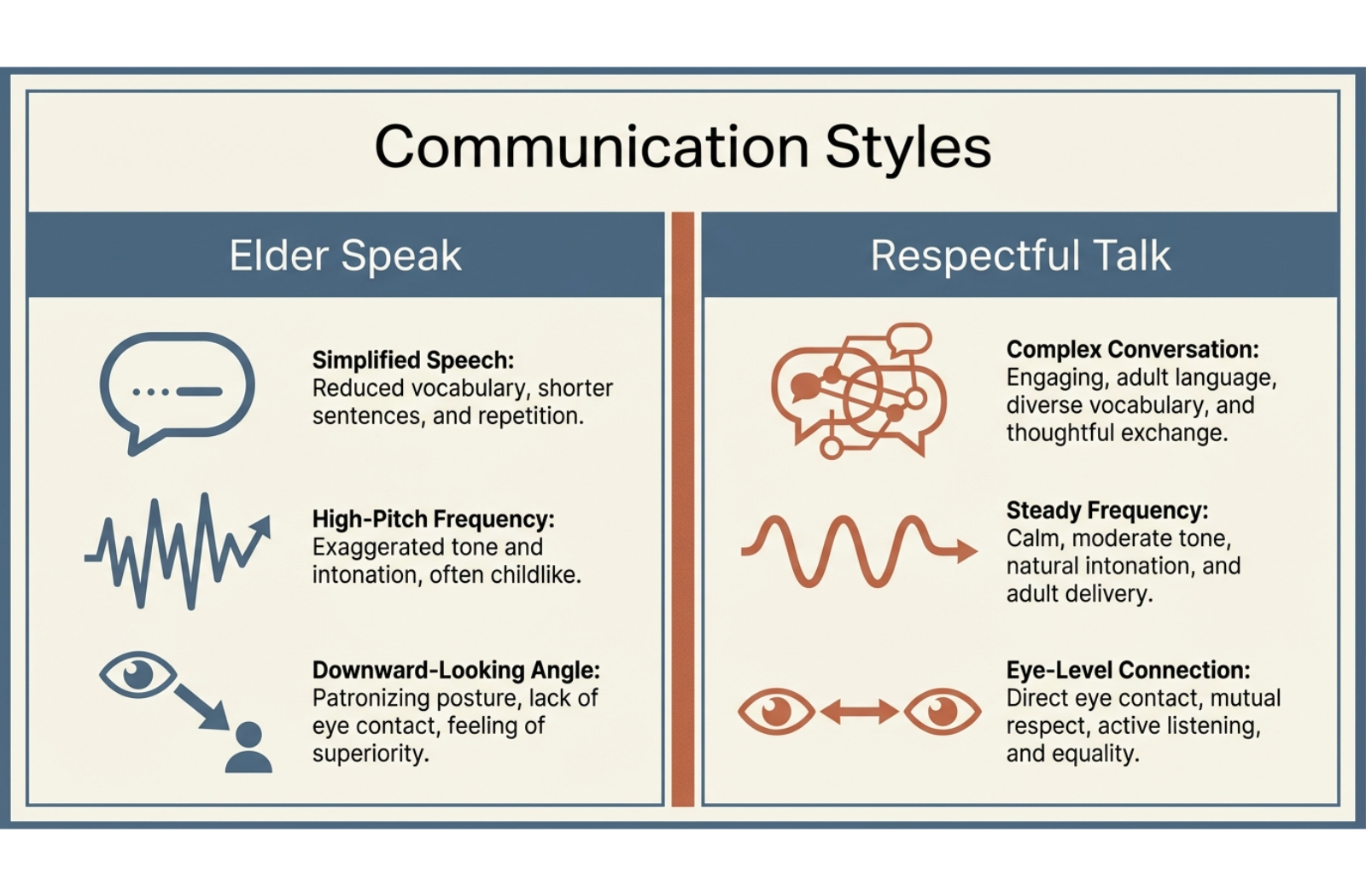
“Elder speak” refers to a communication style that resembles how someone might speak to a young child. It often includes a sing-song tone, overly simple wording, or speaking more slowly than necessary. Many people use it without realizing it, especially when they are unsure how to communicate during cognitive changes.
Even when the intent is supportive, this approach can feel patronizing. It may signal to your loved one that they are less capable than they truly are. Over time, this can affect confidence, independence, and emotional well-being. Respectful, adult-to-adult communication helps preserve identity—it should never be insulting or rude.
Common Examples of Elder Speak
These habits often develop without much thought. They’re usually meant to make communication easier, but they can have the opposite effect.
Unnecessary Changes in Volume or Speed
It’s common to speak louder or slower when you’re unsure how well someone understands you. However, this can feel frustrating if your loved one is still able to follow a normal conversation. Instead of adjusting automatically, match their pace and tone first.
Oversimplified Language
Short, overly basic sentences can come across as talking down to someone. Clarity is helpful, but oversimplifying can feel dismissive. A better approach is to speak naturally while keeping your wording straightforward and easy to follow.
Using Pet Names Without Permission
Terms like “honey” or “sweetie” may feel comforting to you, but they can feel impersonal or diminishing to someone else. Using your loved one’s preferred name shows respect and reinforces their sense of identity.
Better Ways to Communicate With Your Loved One
Improving communication doesn’t require a complete overhaul. Small, intentional changes can make conversations feel more balanced and respectful. These approaches help maintain connection while reducing frustration on both sides.
Speak as an Adult
Use your normal tone of voice and address your loved one in a way that reflects who they are. Recognize their life experience and include them in meaningful conversation whenever possible.
Use Clear and Direct Language
Aim for clarity without oversimplifying. Short, straightforward sentences are helpful, but they should still sound natural. If something is complex, break it into smaller parts rather than changing your tone.
Ask Questions and Listen
Invite your loved one to share their thoughts. Open-ended questions create space for them to express themselves, and listening without interruption shows that their voice matters.
Practice Patience
Pauses in conversation are normal. Give your loved one time to respond, even if it takes longer than expected. Avoid finishing sentences for them unless they ask for help.
Pay Attention to Nonverbal Cues
Communication extends beyond words. Eye contact, facial expressions, and body language can help reinforce a calm, supportive tone and make interactions feel more comfortable.
How Communication Supports Memory Care and Daily Life
The way you communicate can shape how your loved one experiences their day. Consistent, respectful interaction helps create a sense of stability, especially when routines or surroundings may feel uncertain. Over time, these small moments of communication build a more supportive and comfortable environment.
Builds Trust Through Consistency
Trust grows when communication feels steady and predictable. Using a calm tone, familiar phrasing, and clear explanations helps your loved one feel more secure in each interaction. When they know what to expect from conversations, it becomes easier for them to engage and respond with confidence.
Helps Prevent Confusion and Escalation
Misunderstandings can quickly lead to frustration, especially when someone is already feeling unsure or overwhelmed. Clear, direct communication reduces the chances of mixed signals or unclear expectations. Taking a moment to explain what’s happening—or what comes next—can help avoid unnecessary stress for both of you.
Reinforces Identity and Self-Worth
Every conversation is an opportunity to affirm who your loved one is. Addressing them by name, acknowledging their preferences, and including them in decisions reinforces their sense of self. Even small, everyday exchanges can remind them that they are still seen, heard, and respected.
Building Stronger Connections Through Everyday Conversation
Conversations shape how your loved one feels—about themselves and about their relationships. When communication is grounded in respect, it creates a stronger sense of connection and stability. Even small changes can have a meaningful impact over time.
At The Fairways at Naples, communication is part of how care is approached every day. Our team focuses on creating an environment where each interaction supports dignity, trust, and comfort. Schedule a tour with us today to learn more about our approach to memory care.