


Key Takeaways
- The FAST score is a 7-stage guide that helps you and care professionals understand the progression of dementia.
- It serves as a roadmap, allowing you to anticipate changes and plan for future support.
- Knowing the stages helps improve communication between you and your loved one’s care team.
- While the score is a useful tool, a personalized approach to memory care that focuses on the individual is always the priority.
What the FAST Score Can Tell You
When you’re supporting a loved one with dementia, it’s natural to look for ways to better understand the changes they are experiencing. At communities like The Fairways at Naples, families find that having a clear frame of reference helps them feel more prepared for the road ahead. Learning how to help a parent with dementia often starts with understanding their journey.
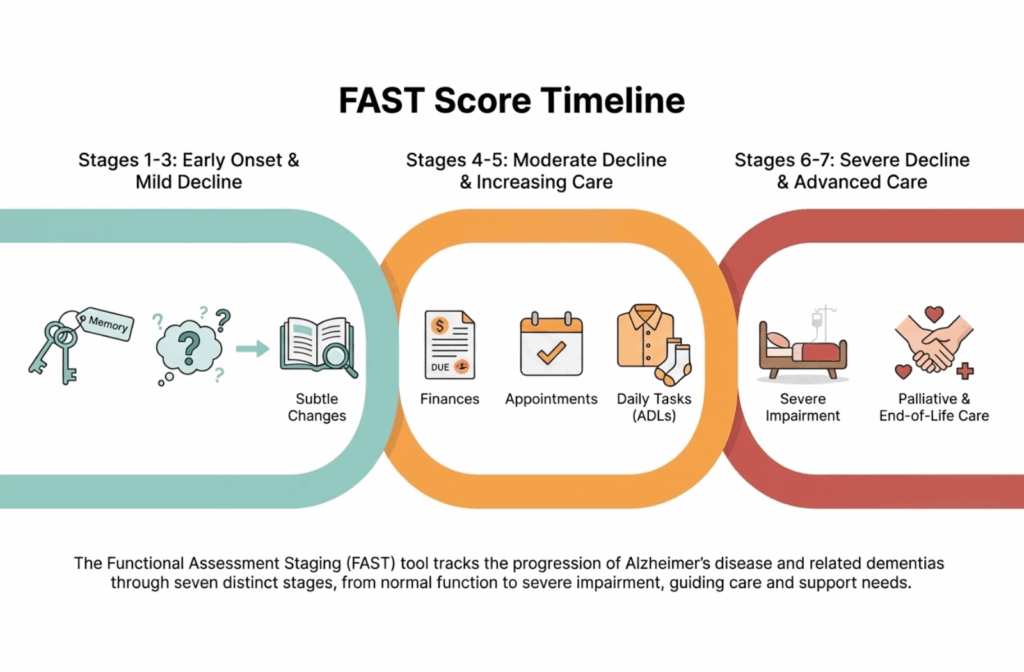
You may find that a tool like the Functional Assessment Staging Test, or FAST score, can be very helpful. It offers a framework to map the progression of dementia through 7 stages, giving you a clearer picture of your loved one’s evolving needs.
A Simple Look at the 7 Stages
The FAST score provides a general outline of the changes that may occur as dementia progresses. Think of it as a guide rather than a strict timeline, as everyone’s journey is unique. The scale moves from stage 1, which shows no cognitive changes, to stage 7, which describes the most advanced stage.
Stages 1 to 3: Early Changes
In the beginning stages, the changes you notice may be very subtle and easy to mistake for normal, age-related forgetfulness. Stage 1 indicates no noticeable decline at all. During stage 2, your loved one might occasionally forget a familiar name or misplace their keys, but these instances are infrequent. By stage 3, you or other close family members may start to observe more consistent difficulties, such as trouble finding the right word or challenges with complex tasks. These are often some of the first dementia symptoms to track, and noting them can be useful for future conversations with care providers.
Stages 4 and 5: Increased Support Needs
As your loved one moves into the middle stages, the need for support often becomes more apparent. In stage 4, you might see them struggle with sequential tasks like paying bills or planning a family get-together. They may withdraw in social situations or have trouble remembering recent events.
Stage 5 marks a point where assistance with daily decisions becomes more necessary. Your loved one may need help with what are known as instrumental activities of daily living (IADLs), like managing finances, as well as basic daily tasks. You may find they need reminders for choosing appropriate clothes for the weather or remembering their address.
Stages 6 and 7: Advanced Progression
The later stages are characterized by a greater need for hands-on assistance with personal care. Stage 6 is broken down into several sub-stages, but it generally involves needing help with activities like dressing, bathing, and using the restroom. Providing support during personal care routines requires patience and a gentle approach.
You may also notice behaviors like wandering, changes in sleep patterns, or shifts in personality during this time. In stage 7, the final stage, communication and mobility become very limited, and around-the-clock support is common to maintain their comfort and quality of life.
How You Can Apply This Knowledge
Plan for Future Care
Knowing where your loved one is on the scale helps you look ahead and explore options for their future. This knowledge allows you to research different types of senior living and learn about the difference between a nursing home and memory care before the need becomes urgent. When you have this information ahead of time, moving a parent to a community feels like a more thoughtful and planned transition rather than a reaction to a crisis.
Improve Communication with the Care Team
When you can describe your loved one’s abilities using the FAST score framework, it helps create a common language between you and their care providers. Instead of saying “mom seems more confused,” you can point to specific challenges that correspond to a stage. This leads to more productive conversations and a more aligned care plan. Having a shared understanding can also make it easier to navigate difficult conversations about future wishes and support, helping everyone get on the same page.
Why Personalized Care Matters Most
Focus on the Whole Person
A person is more than their diagnosis or their score on a scale. A truly supportive approach to memory care always prioritizes the individual’s personality, life story, and preferences. Care plans should be built around what brings them joy and a sense of purpose.
In fact, participating in the arts and other enjoyable activities can help promote well-being and connection for older adults. This person-centered approach uses tools like the FAST score to inform care, not to define the person receiving it.
Adapt Support as Needs Evolve
As your loved one’s needs change, their support system should adapt, too. High-quality care is flexible and responsive. For example, options for short-term senior care can provide temporary support for family caregivers.
Taking a break is important for avoiding caregiver burnout, which allows you to continue providing loving support long-term. A compassionate memory care program will continually adjust its approach to match your loved one’s current abilities, promoting comfort and engagement at every turn.
Move Forward with a Supportive Partner
Navigating the path of dementia care can feel overwhelming, but you do not have to walk it alone. Connecting with a community that understands this journey can provide immense relief and a sense of direction for your family.
At The Fairways at Naples, we are prepared to help you identify a lifestyle option that fits your loved one’s unique situation. With a focus on building relationships, our team is ready to support a life of peace and comfort. You can schedule a visit to learn more and see our community firsthand.